

Bed Room Decor, Style
Plan the perfect wardrobe
Jan
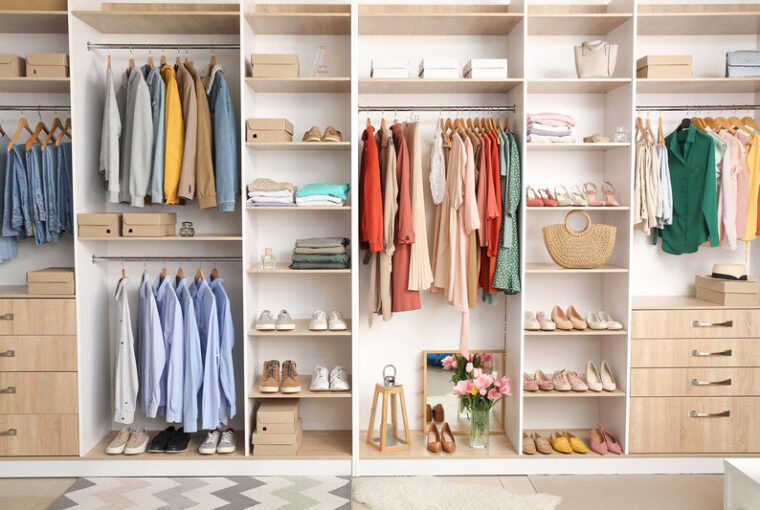
It should be large enough and neatly organized, keeping your favorite pieces safe, but not too bulky or cluttering the room: choosing the right wardrobe isn’t so easy, especially since the options and variations seem endless. These seven questions will help you plan the perfect wardrobe.
Table of Contents
1. Freestanding or built-in – which wardrobe should it be?
A freestanding wardrobe refers to the type of wardrobe offered in furniture stores that can simply be assembled against the desired wall in the bedroom. Since they are available in a wide variety of designs and standard sizes, the right model can quickly be found for (almost) every need and room size.
Built-in wardrobes are custom-made and can be precisely tailored to the bedroom layout and personal needs. They make optimal use of available space and offer maximum storage with the highest quality. Since these wardrobe solutions are custom-made by a cabinetmaker, they are usually somewhat more expensive than freestanding wardrobes, but often more durable. Another advantage is that they allow for the optimal use of challenging room layouts with niches, sloping ceilings, or similar features.
2. Where is the best place for it?
It’s no coincidence that a wardrobe is usually located in the bedroom: this is where the day begins and ends, and the necessary clothing for every occasion is readily available. The most popular solution is to install the wardrobe against a free wall . However, depending on the room’s layout, other locations are also possible and practical.
Wardrobe as a room divider
Functional and aesthetic: The wardrobe as a room divider. It can visually separate different areas of a room, such as a dressing area and a sleeping area, or, in smaller living spaces, a living area and a sleeping area. Even in larger spaces, such a wardrobe solution can lend a sense of calm to the room, especially if it is an open wardrobe.
Wardrobe under the sloping roof
Placing a wardrobe under a sloping roof is a great idea for saving space and creating a practical yet attractive storage solution. Since this often requires custom-made wardrobes that are angled or have a reduced height, it’s advisable to consult a carpenter.
Wardrobe under a staircase
Ideal for houses or apartments: The often unused space under a staircase offers enough room for an unobtrusive and practical built-in wardrobe for clothes that are not currently in use. This can be fitted with either doors or an attractive curtain.
3. What materials are available?
The classic material for wardrobes is solid wood , which is not only robust and durable but also creates a beautiful atmosphere in the room. Pine, oak, or beech are most commonly used, especially for custom-made solutions.
Modern wardrobes are often made from engineered wood with foils or coatings . This allows for a wide selection of colors and finishes, complementing many different interior design styles in white, black, or colored finishes, as well as wood or concrete looks. White fronts, for example, are both simple and timelessly elegant. They visually recede into the background compared to other furniture and can be combined in a variety of ways. Dark fronts, on the other hand, absorb a lot of light, which many find pleasant in the bedroom. However, dark wardrobes can quickly make small rooms feel cramped. This effect can be counteracted with mirrors.
4. What kind of doors should it have?
The most common solution for wardrobes is hinged doors , which are attached to one side of the frame and open into the room via a hinge. However, to allow the doors to open fully, a fair amount of space is needed in front of the wardrobe, so wardrobes with sliding or floating doors are often more suitable for small rooms.
With sliding or bi-fold doors , the doors “run” in front of the frame. They are mounted in tracks at the top and bottom (sometimes only at the top). Because sliding and bi-fold door wardrobes don’t open into the room, they require significantly less floor space than hinged door wardrobes. However, you can never see the entire contents of the wardrobe at once.
Similar to sliding door wardrobes, folding door wardrobes are also suitable for rooms with limited space. They also have an upper track into which the folding doors are hung. When opening the wardrobe, the door panels are slid to the side, where they fold together into a compact package.
Open solutions or louvered doors are also trending, saving space and being a real eye-catcher. The disadvantage, however, is that clothes can get dusty or fade in the sun.
5. How big should the wardrobe be?
The required size of the wardrobe depends on the size of the wardrobe – that is, the number of garments and accessories that need to be neatly stored. If home textiles – such as bed linen, blankets, and tablecloths – or bags, backpacks, and suitcases also need to fit in the wardrobe, this must of course be taken into account when choosing the size.
Besides the required storage space, you should also consider who will be using the wardrobe . A wardrobe for two people generally needs to be larger than one for a single person. The German Furniture Industry Association recommends a volume of one cubic meter per person. This would correspond to a wardrobe 100 cm wide, 54 cm deep, and 200 cm high. However, if you calculate with 1.5 cubic meters (that’s 120 cm wide, 60 cm deep, and 220 cm high), you have some leeway – because most people own significantly more clothes than they realize!
The following can therefore be considered as general guidelines :
- Wardrobe for one person: from 120 cm width
- Wardrobe for a couple: from 250 cm wide
- Family wardrobe: from 350 cm width
- Wardrobe for babies and small children: from 70 cm wide
The height of the wardrobe should be such that it matches the ceiling height of the bedroom. You should consider beforehand whether or not you plan to store anything on top of the wardrobe.
Wardrobes typically have a depth of between 55 cm and 65 cm to optimally accommodate hanging garments. However, there are also models with a depth of between 35 cm and 45 cm, which are usually intended for use as hallway wardrobes. These can also be used as wardrobes in smaller bedrooms.
6. What interior fittings are needed?
Just like the size of the wardrobe, the preferred equipment also depends largely on one’s own wardrobe: those who have many clothes will need more clothes rails, those who wear more shirts and trousers will probably benefit more from drawers and shelves.
Generally, various options are possible, which can of course also be combined with each other:
Clothes racks
Wardrobes with one or more clothes rails are ideal for storing hanging garments – especially longer jackets, dresses, or coats. In tall wardrobes, two clothes rails can be installed one above the other, creating additional hanging space. The wardrobe floor may also be suitable for storing suitcases, bags, or shoes.
shelves
A wardrobe with one compartment containing a clothes rail and another with shelves is ideal for storing both hanging and folded clothes. The shelves should be at least 30 cm wide and deep.
The number of shelf units you plan for depends on how high the stacks of folded clothes will be. As a guideline, ten stacked T-shirts will fit into a shelf approximately 25 cm high, while ten pairs of trousers or sweaters will require about 30 cm of height.
Anyone who wants to shorten the hanging part of the wardrobe to add shelves at the top or bottom should plan for a height of 80 cm, provided that only blouses or
Blazers can be hung up. Men’s shirts and jackets need 100 cm, long dresses with hangers often need 180 cm.
drawers
Wardrobes with integrated drawers, as a complement to one or more clothes rails, are practical for small bedrooms where there is no room for a separate chest of drawers. Underwear, socks, and tights can be neatly stored in the wardrobe drawers. Large drawers are also ideal for storing folded clothes such as T-shirts or sweaters.
In addition to these standard elements, there are a number of other tools for the interior fitting of wardrobes, such as pull-out hook rails and trouser elements or integrated jewelry and shoe storage, which can be useful depending on the need.
Tip: The right lighting makes it easier to see what’s inside your closet! Depending on the location, it might be a good idea to invest in a closet with integrated lighting or to install lights and spotlights above or inside the closet.
7. What is the best way to organize the closet?
When organizing clothes in the closet, personal needs are once again paramount. What is practical and allows me quick access to the most important items? What looks the neatest and most aesthetically pleasing to me? These and other questions can be helpful in choosing the right system.
Possible ways to organize clothes in the closet are:
- by type of clothing (for example, shirts on the far left, sweaters in the middle, blazers on the right)
- by color (often the colors are sorted from light to dark)
- according to season (store winter clothes in a separate chest of drawers during the summer)
- according to purpose (for example, work clothes, sports clothes, everyday clothes)
Generally, when organizing a wardrobe, you should distinguish between items you need daily and those you use less frequently. The former are best stored at eye level, i.e., between 60 and 160 cm. Bed linen and towels can then be stored at floor level and in the upper part of the wardrobe.
What does your wardrobe look like?
